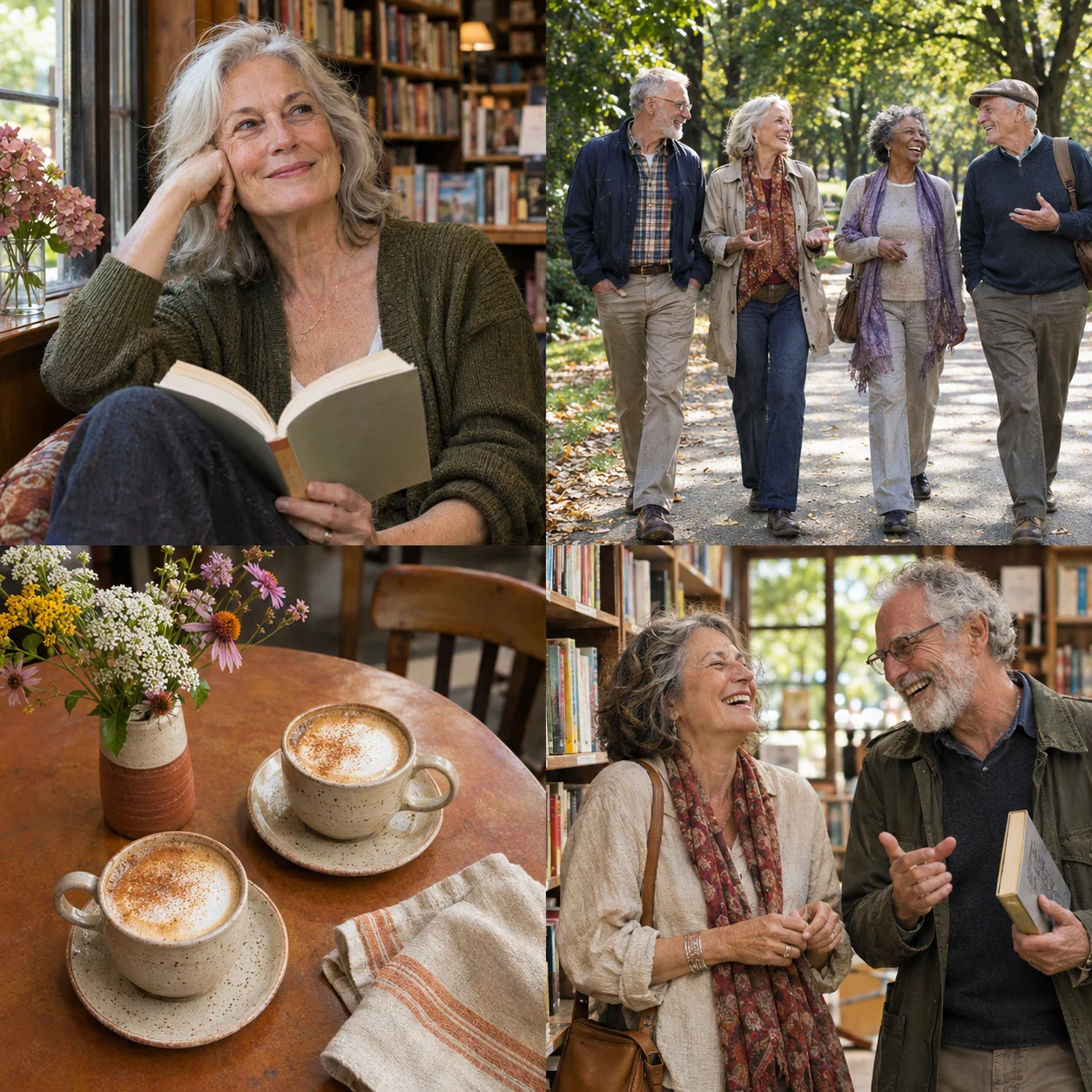
For a first meeting, an easy plan can be a generous one. It says that neither of you has to perform, spend heavily, or commit to a whole evening before you know how it feels to be together. Start with a setting you both find comfortable. Ask about practical preferences rather than guessing what someone of a particular age will enjoy. The point is to give the conversation a fair chance.
1. Coffee with an actual place to sit
Choose a café with comfortable seating and enough space to talk. Check the opening hours and whether the time you are considering is especially busy. A fashionable place with loud music may be less useful than an ordinary one where you can hear each other.
Agree on something simple: “Shall we meet at eleven for a coffee?” You can enjoy that hour as a complete date. There is no need to add lunch unless both of you want to. If coffee is not your thing, tea or a bakery works just as well.
2. A small exhibition and one conversation
A local museum or gallery offers things to notice together. You do not need matching expertise. “Which piece would you take home?” can be more inviting than trying to deliver a perfect interpretation of every room.
Check admission costs, seating, accessibility, and photography rules in advance. Choose one exhibition rather than planning to explore an entire building. Leave space to sit down afterward if you both feel like talking longer.
3. A bookshop with a café nearby
Browse for a few minutes and each choose a book you would recommend, one you are curious about, or one whose title makes you laugh. The books become conversation prompts without requiring either person to have prepared a list of fascinating topics.
Keep the browsing part short enough that it still feels like time together. If the shop is crowded or quiet conversation is not welcome, move to the café rather than turning the shelves into an obstacle course.
4. A farmers’ market on an unhurried morning
A market can offer little discoveries: unfamiliar bread, a flower stall, or a debate about the best seasonal fruit. Agree on a clear meeting point and a short route so you are not searching through a crowd for someone you have only seen in photographs.
Ask about standing and walking comfort beforehand. Have a nearby seated option and a weather backup. Buying gifts or carrying someone’s bags should be an offer, never an expectation built into the date.
5. A public garden with an easy route
Pick a busy, maintained garden or park with seating, clear entrances, and a route you can describe. A short loop with an optional stop suits a first meeting better than an ambitious hike far from other people.
Ask about pace and distance without making assumptions. “Would a short stroll suit you, or would you prefer to sit somewhere?” is straightforward and considerate. Check the forecast and agree on an alternative before either of you leaves home.
6. A daytime community event
Consider an open studio, a small craft fair, or an afternoon performance with a café afterward. Check whether the event actually leaves room to talk; a two-hour presentation with no break may be better for a later date.
Confirm ticket costs and who is paying before booking. Keeping the cost modest makes it easier for both people to choose freely. Neither an invitation nor a paid ticket creates an obligation to extend the date.
Before you go
RAINN’s guidance includes choosing a populated public place, telling someone you trust about the plan, and keeping control of your transportation. You can leave whenever you feel uncomfortable. These precautions reduce risk; they cannot guarantee safety.
For a useful final check, ask: can we hear each other, can we both get there easily, and can either person finish the meeting without awkward logistics? If the answer is yes, the setting has done its job. The rest can be a conversation.
Sources & further reading
External sources support the safety guidance. Activity ideas and conversation examples are editorial suggestions.